About Carol Miller
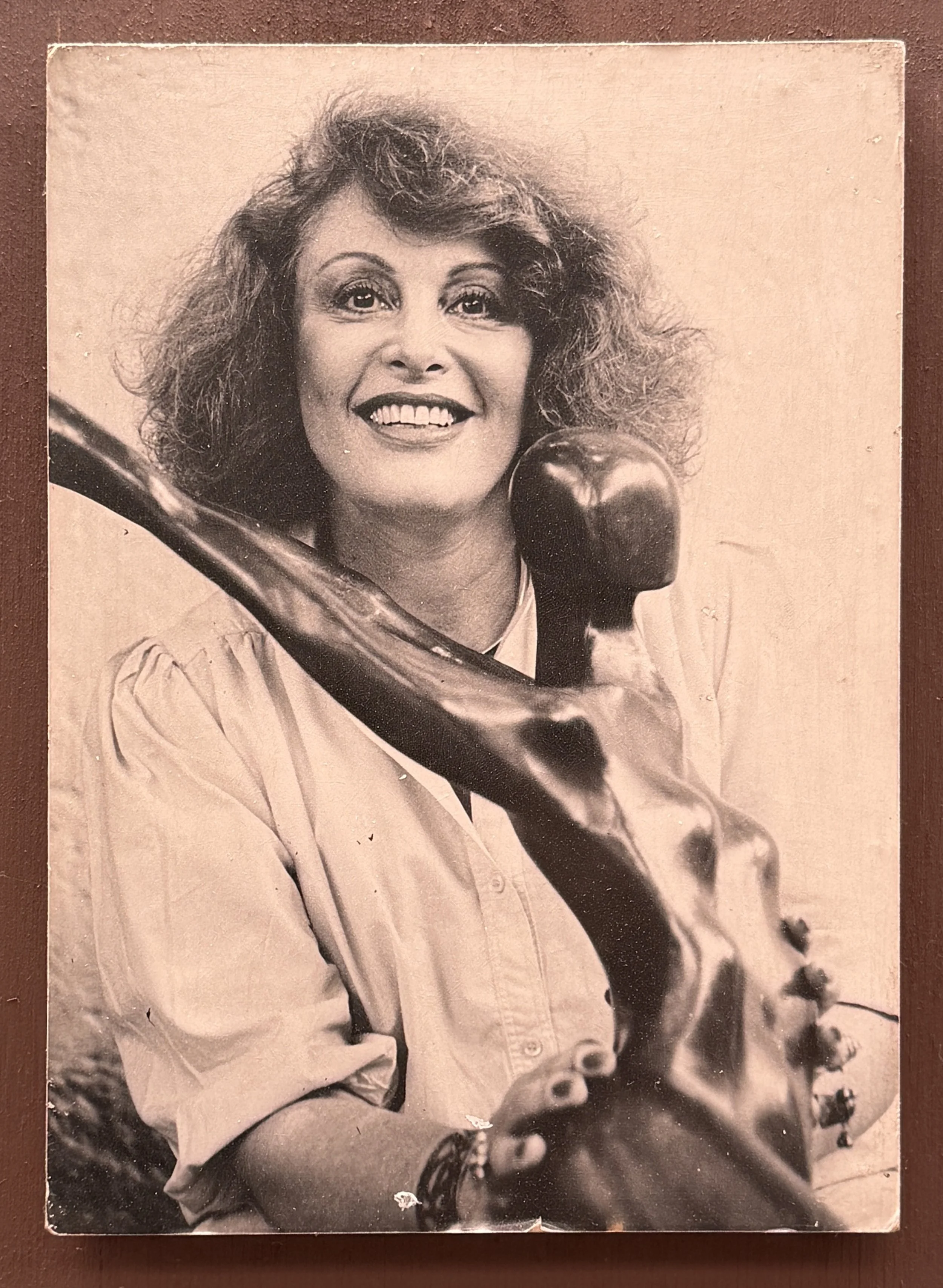
Carol Miller was born in Los Angeles in 1933, but Mexico City claimed her. She arrived in the early 1950s as a journalist — writing for Life magazine, covering culture and travel — and never left. The city didn't just become her home. It became her material.
Her path to sculpture came through a single afternoon. While interviewing Mexican sculptress Charlotte Yazbek for Life, Miller found herself drawn into the studio. Yazbek offered her tools. Miller picked them up and built a career. Over four decades, she produced hundreds of bronze sculptures, exhibited in more than 200 individual and group shows, and mounted a major solo retrospective at the Museo Dolores Olmedo. Her studio in Pedregal — one of Mexico City's great neighborhoods of modernist architecture — became the place where the work was quietly, relentlessly made.
Miller is also a writer, translator, and scholar. She has authored more than thirty books, translated major exhibition texts for the Museo Dolores Olmedo, and spent decades researching Mesoamerican civilizations, especially the Maya. This intellectual life is not separate from her sculpture. It runs straight through it.
Her story is one of radical commitment — to a city, to a craft, to the long and patient work of making something that lasts.
The Sculpture
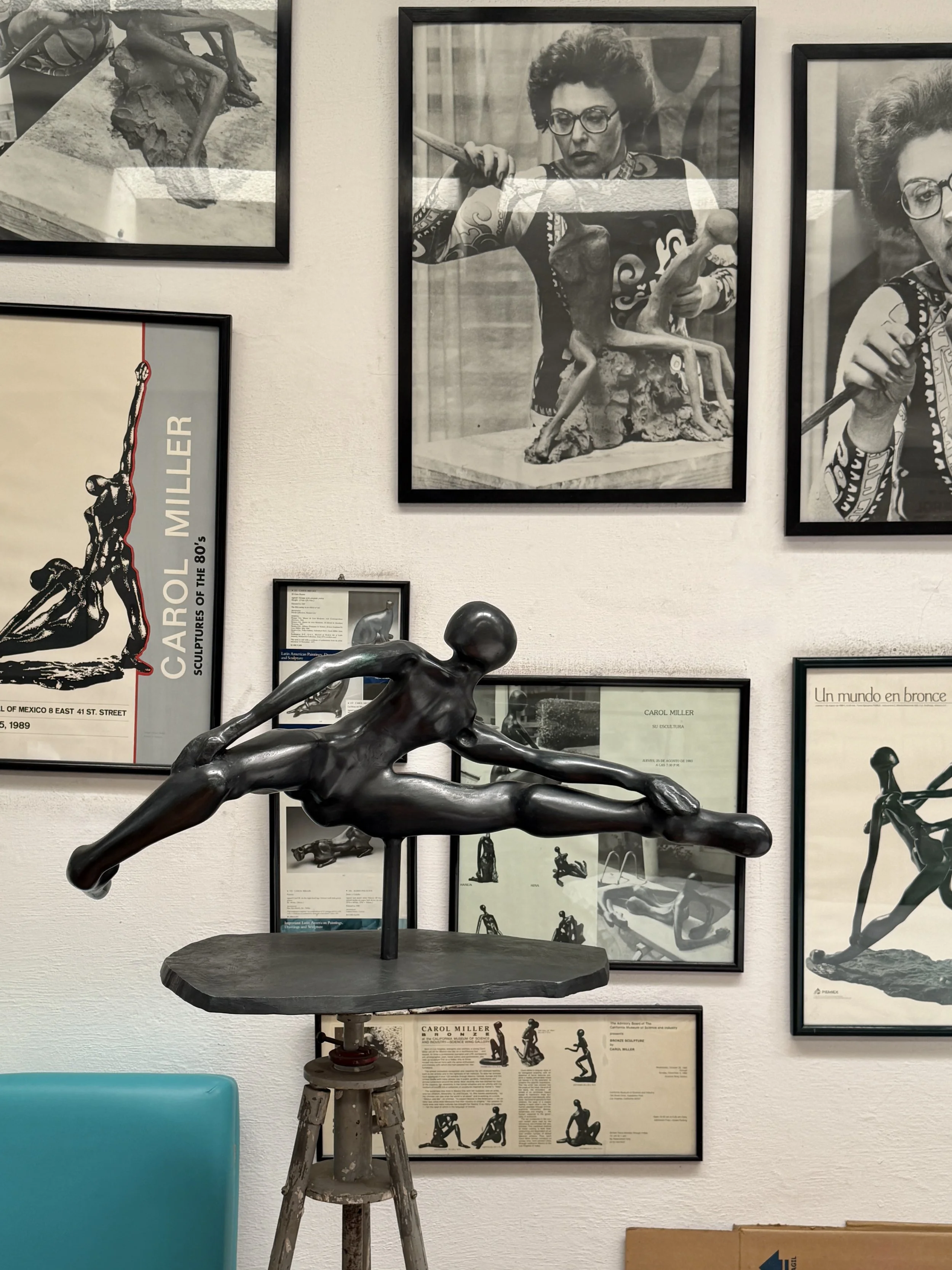
Carol Miller works in bronze, and has for more than four decades. The human body is her subject — not as anatomy to be reproduced, but as a territory to be explored. Her figures are powerful without being rigid, expressive without being sentimental. They carry ideas that resist easy translation into words. Which is, of course, exactly the point.
Her most striking signature is the featureless face. Her figures possess extraordinary physical presence, yet their faces remain smooth and unresolved. "Only God can make a face," she has said. The blank face is not an evasion — it is an invitation. The viewer supplies the emotion. The sculpture provides the vessel.
Her forms draw from both art history and cultural anthropology. Mesoamerican myth, pre-Columbian philosophy, the body in motion — these are not decorative references but structural ones. As critic Sonia Sierra wrote in El Universal, her work carries "the stamp of the cultural more than the history of art." In Miller's hands, the human figure becomes a place where the universal and the specifically Mexican meet.
Every stage of the process — except the foundry — is Miller's alone. That insistence on direct making gives her bronzes their distinctive quality: a living surface, a sense of real decisions made by real hands. The work does not feel produced. It feels discovered.
Legacy and Cultural Impact
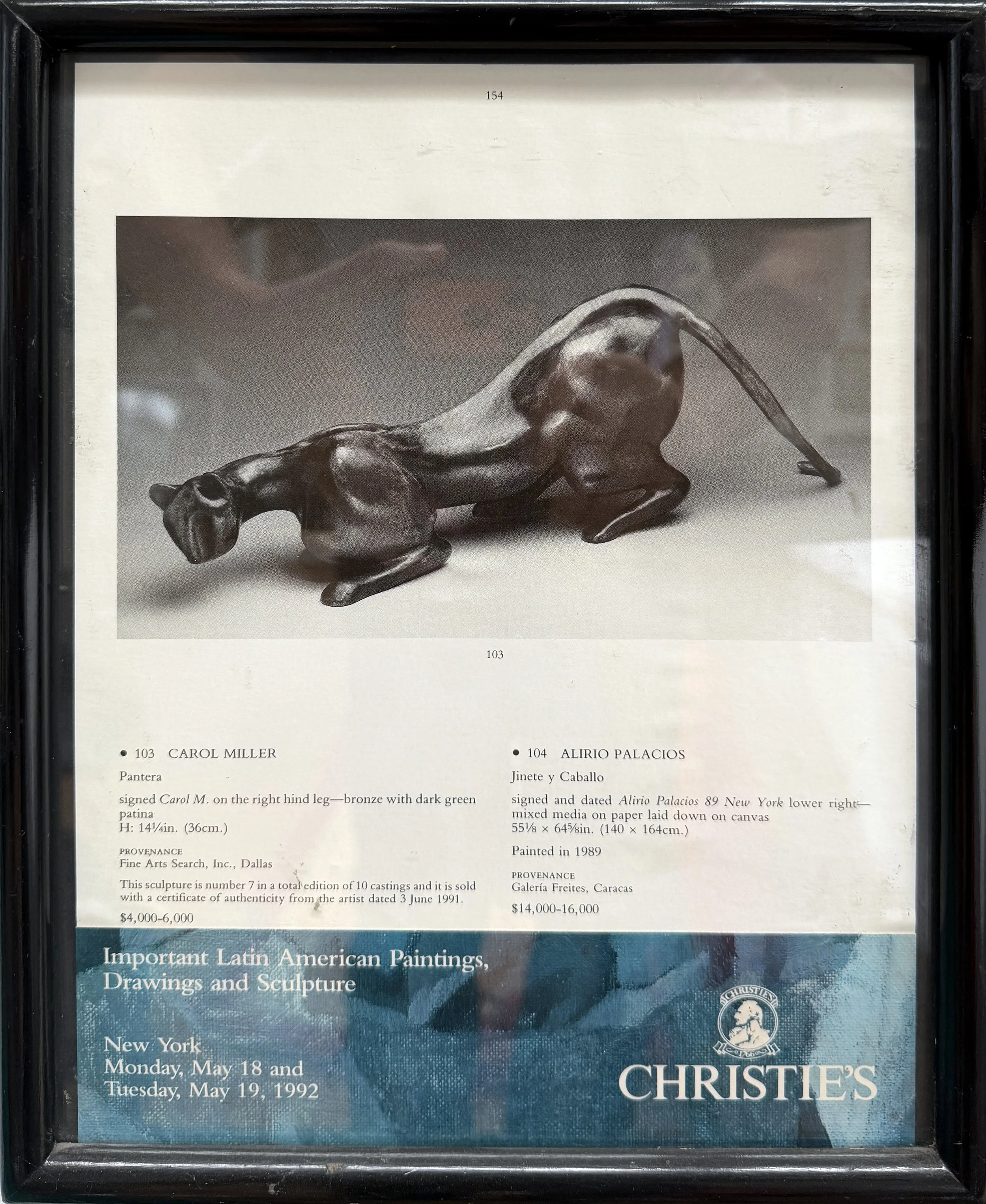
Carol Miller earned her place in Mexico City's art world the hard way — not as a foreign observer, but as a full participant. Her decades in Pedregal, her long relationship with the Museo Dolores Olmedo, her presence in the city's major galleries and auction houses: these reflect genuine integration into Mexican cultural life, built slowly and without shortcuts.
Her recognition has crossed borders. Italy's Accademia Internazionale Greci-Marino awarded her its Superior Academic Order, later elevated to Honorary National Councilor for Mexico, in recognition of her work in sculpture and letters. She is also a member of the Society for American Archaeology and a respected authority on Mayan culture — proof that her curiosity was never confined to the studio.
What her life and work leave behind is something simple and rare: fifty years of serious making, in a city that demands it, in a medium that does not forgive shortcuts. The bronzes endure. So does the example.
Every stage of the process — except the foundry — is Miller's alone. That insistence on direct making gives her bronzes their distinctive quality: a living surface, a sense of real decisions made by real hands. The work does not feel produced. It feels discovered.
Contact us
Interested in working together? Fill out some info and we will be in touch shortly. We can’t wait to hear from you!